Truck Ammo Reading Accessories
As you look for lift kits and truck accessories in Reading, first decide whether a leveling kit or complete suspension lift is right for you. A leveling kit corrects factory rake and maintains daily manners, while a suspension lift system provides clearance, wheel travel, and larger tire fitment. Make sure you have exact year, trim, drivetrain, and suspension information to verify Rough Country fitment. Plan your spending for tires, alignment, and add-ons including steps, lights, or liners—you'll see how the right setup comes together.
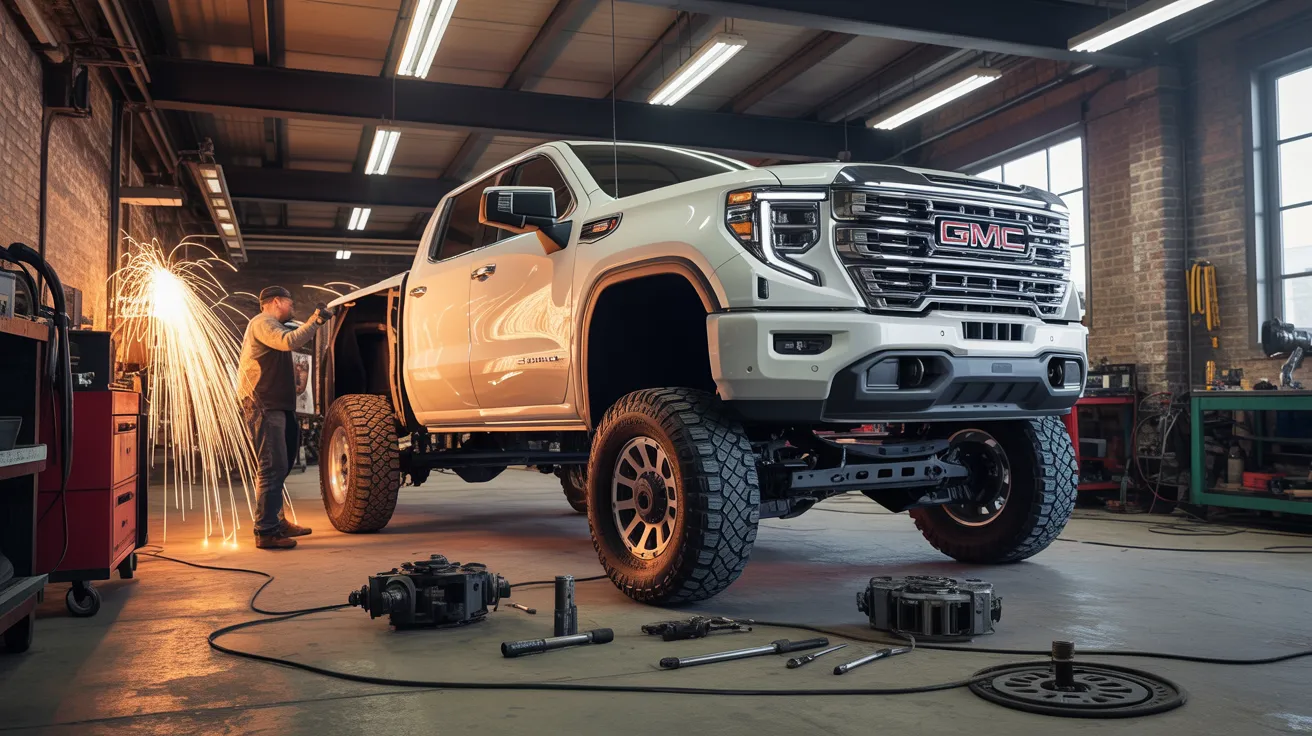
Important Highlights
- Opt for a leveling system to eliminate factory rake while maintaining near-stock performance and enabling slightly larger tires for routine driving.
- Choose a suspension lift for added ground clearance, wheel travel, and off-road performance, recognizing that steering response may differ.
- Confirm proper fitment by checking your truck's year, make, model, drivetrain, trim, cab, bed, and suspension package prior to ordering Rough Country parts.
- Pair lift height and shocks to your usage needs, whether you're commuting, doing trail work, towing, or serious off-road travel.
- Budget for more than the kit cost, including alignment, labor, wheels, tires, shocks, and supporting accessories like steps, lights, and liners.
Suspension Lifts versus Leveling Kits
Even though both enhancements modify your truck's look, leveling kits and suspension lift kits fix separate issues and give unique results. A leveling system tends to raise the front to match the rear, correcting factory rake with limited change to geometry, ride height, and daily drivability. You use one if you seek a cleaner profile and room for slightly larger tires.
A suspension lift kit raises the whole truck and changes key components to produce more clearance and wheel travel. You'll see larger improvements in ride height, off-road performance, and tire options, but you should expect handling tradeoffs, steering changes, and a higher center of gravity. If you want mild visual correction, use a leveling kit. If you need real clearance and articulation, lift it and design the supporting modifications around your use case.
Determine which Rough Country lift kit is right your truck.
To find what you need, start with your truck's year, manufacturer, and model, powertrain, and primary purpose, because Rough Country builds lift kits around exact structural design and capability objectives. That baseline tells you which suspension components, brackets, and hardware will actually bolt on without clearance or geometry issues.
Subsequently, verify OEM ride height, cab layout and bed configuration, axle setup, and whether your truck has 2WD, 4WD, or adaptive suspension. Rough Country compatibility documentation help with this step, yet you see here should confirm component compatibility versus trim-level parts and factory package differences. A kit designed for a Silverado 1500 may not fit a Trail Boss, and a Ram with air-based suspension demands different provisions than a truck with coil springs. By confirming compatibility first, you eliminate unexpected problems, compatibility issues, and return hassles.
Find the Rough Country lift kit that suits your driving style.
Pair the kit to your driving patterns, and you'll enjoy enhanced ride quality, reliability, and additional tire clearance without purchasing unnecessary capability. When commuting is your primary use, pick a mild Rough Country leveling kit or a 2 to 3.5 inch suspension setup designed for commuting comfort and predictable steering geometry.
When you alternate between pavement and trails, go with a suspension upgrade featuring improved shocks and optimized control arm positioning. You'll gain better trail handling, improved articulation, and capacity for bigger tires without taxing factory components. For heavier trail use, emphasize raised struts, Rough Country N3 or Vertex dampers, and kits that maintain driveline angles under compression. A quality Rough Country package should align with load, speed, terrain, and your tolerance for ride stiffness.
Top Rough Country Truck Accessories
Round out your suspension upgrade using Rough Country accessories that solve the actual issues you'll notice after changing ride height, tire size, and vehicle stance. Go with improved entry steps or rock sliders, that recover ease of cabin entry and add lower-vehicle protection once your truck sits higher and wider.
Next, prioritize
How Much Should You Budget for Your Build?
After selecting the suspension lift and supporting accessories, allocate a budget above the base price. You'll require money for shocks, wheel sets, tire options, alignment, work costs, and any steering or drivetrain adjustments your platform demands. Brand reputation counts; premium systems usually offer stricter specs, smoother rides, and fewer install headaches.
For realistic budget ranges, plan for budget-friendly spacer or leveling kits to start at the bottom, while full suspension systems with control arms, tuned dampers, and larger tires escalate rapidly. Install difficulty, labor charges, and calibration work can add substantially. You should also price additional upgrades such as gear modifications, brake parts, and recovery equipment if you plan to use it off-road. If cash flow matters, compare financing options carefully and prioritize dependability over flashy add-ons.
Frequently Asked Questions
How Do Lift Kits Influence Warranty Coverage?
Yes, lift kits can affect your original warranty, but they won't automatically cancel it. You encounter warranty issues should a dealer proves the lift modification brought about or contributed to a failure. Powertrain, steering, suspension, and drivetrain claims frequently create dealer disputes. You need to preserve installation records, use quality components, and maintain service schedules. That helps you refute denied claims and safeguard warranty where the modification isn't responsible.
Does Going Bigger Require Gear Changes?
Yes—when you jump multiple tire sizes, you'll often require re-gearing. Take switching from 31s to 35s, for example—your vehicle may feel underpowered, hunt for gears, and build drivetrain stress under load. Re-gearing restores optimal gear ratios, assisting you to recover power delivery, towing capacity, and transmission feel. You might not need it for small tire changes, yet if power, MPG, or shifts worsen, it's generally the correct move.
How Often Should Lift Kit Components Be Inspected?
You need to examine lift kit components after the first 500 miles, afterwards each time you change oil or at 3,000 to 5,000 mile intervals, depending on use. Regular maintenance checks enable you to spot bushing wear, shock leaks, bracket damage, and alignment issues early. Check Fastener torque after hard off-road runs, towing, or impacts. If you drive in mud, salt, or rough terrain often, tighten inspection schedules and inspect suspension and steering parts more frequently.
Can a suspension kit change towing or payload capacity?
Yes, a lift kit can affect your towing and payload capacity. When you raise ride height for additional clearance, you alter suspension design, weight distribution, and leverage on components. That can reduce stability under load and boost transmission strain, especially with larger tires. You should follow your OEM specifications unless an engineered kit clearly outlines revised capacities. Proper alignment, gearing, and braking ability are important as well.
Should alignment checks occur following installation of truck modifications?
Yes—if accessories alter ride height, suspension geometry, steering angles, or tire size, you require an alignment. You'll feel the theory fast: slight changes can cause your truck to pull to one side, scrub tread, and compromise handling. A proper wheel alignment restores camber, caster, and toe to spec. After certain installs, you may also need brake calibration for driver assistance precision. You protect tire life, steering accuracy, and real-world safety by verifying alignment right away.
Final Thoughts
Picking the ideal lift package and components copyrights on your truck usage, what stance you want, and what your budget can handle. When you align a Rough Country lift kit with your driving style, you'll obtain performance, clearance, and looks which coordinate as efficiently as a calibrated engine. Add smart accessories, organize your budget responsibly, and you'll build a pickup which becomes practical on the road, capable off it, and ready for whatever job comes next.